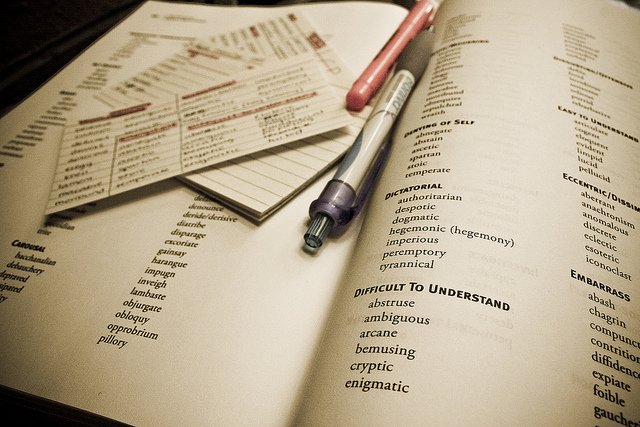
This is a guest post by Michael Santangelo of StudyHSK, the most intensive and structured online course.
Acquiring a foreign language is made
difficult through random concepts that cannot be explained through rules. In western
languages many such random concepts exist in relation to the use of articles:
in English the use of the indefinite article “a”, in German or French the use
of definite articles like “der, die, das” or “le, la” respectively. In Mandarin
Chinese two such major random concepts exist, namely the tonal system and
Chinese character handwriting. However, if you take these random concepts out
of the equation, Mandarin Chinese is not harder to learn than any other
language.
The only solution to mastering these random
concepts is through studying them one word at a time. Knowing which tone goes
with which syllable or how to handwrite a certain character will only manifest
itself through constant use – and even then, you will probably forget this
information more often than not. This is normal (even Chinese native speakers
face the same obstacles) and once you accept that everyone has to deal with this
frustration you are already on the way to being a happier student of Mandarin.
Separation of Speech and Script
As soon as it was accepted that these
random concepts are a great source of frustration for Mandarin Chinese students,
a study method was developed by StudyHSK isolating the problem of character
handwriting. Known as the Separation of Speech and Script theory, the method
considers the handwriting of characters (calligraphy) a mechanical skill that
should and can most effectively be taught separately from the other skills of
Mandarin Chinese language learning, i.e. speaking, listening and reading.
Please note that typing Chinese on a computer using Pinyin recognition software
does not fall into the handwriting but reading/speaking category.